


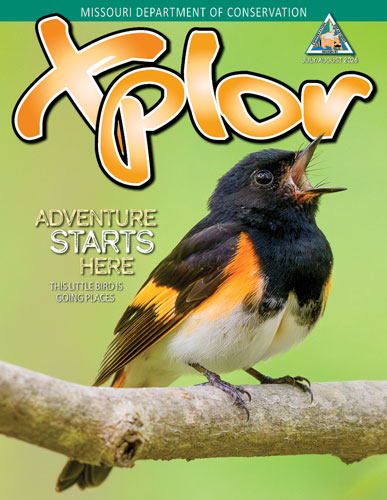
Your guide to all the unusual, unique, and unbelievable stuff that goes on in nature.
Many lizards have a third eye, called a parietal eye. Though it can’t see anything, biologists believe the extra eye detects light, which helps lizards match their behaviors — like courtship or hibernation — to the changing seasons.
While their flashy, day-flying cousins, the butterflies, seem to get all the attention, not all moths are dull and drab. Many — like luna moths, regal moths, and io moths — are as brilliantly colored as any butterfly.
Wild strawberries are Missouri’s only native plant that wears its seeds on the outside of its fruits. The sweet red “berries” ripen in June and July on prairies, pastures, and woodland edges across the state.
Members of the weasel family are famously funky. American badgers and river otters have scent glands that make them smell bad. Long-tailed weasels and least weasels smell even worse. And American mink emit a sickening scent that rivals a skunk’s odor.
North American bullfrogs sure are hoppy. The 6-inch frogs can cover up to 7 feet in a single jump! To accomplish a similar feat, a 5-foot human would need to leap from one free-throw line to the other on a basketball court.
Ants in your pants? Blue jays and other birds sometimes crouch over anthills and let the angry insects crawl all over their bodies. Why? Biologists aren’t sure, but ants release acid, which may help clean a bird’s feathers.
Turn up the AC! If a bumblebee nest gets too toasty in the hot summer sun, worker bees gather at the nest’s entrance and flap their wings to fan out hot air.
Also In This Issue


Join us for a tour of Missouri’s littlest lizards.
And More...
This Issue's Staff
Photographer – Noppadol Paothong
Photographer – David Stonner
Designer – Marci Porter
Art Director – Ben Nickelson
Editor – Matt Seek
Subscriptions – Marcia Hale
Magazine Manager – Stephanie Thurber