


Media
Image

Title
Mountain Lion Signs
Title
Tracks
Body
Expert trackers look for the following to identify mountain lion tracks:
- Three lobes at the bottom of the pad. Dogs and coyotes have one indent at the bottom of their pads.
- Teardrop-shaped toes. Dogs’ and bobcats’ toes are shaped like an oval.
- Between 3- and 3.5-inch-wide tracks. Bobcat tracks will be much smaller—less than 2 inches wide—which is smaller than the print of a 6-month-old mountain lion kitten.
- No claw marks are usually visible, except in extremely rare occasions when mountain lions use them for extra traction or to build up speed. Claw marks are usually visible in dog and coyote tracks. Dogs leave a blunt, flat claw mark. When present, a mountain lion's claw marks are slender and sharp.
Image

Credit
MDC
Right to Use
Photo by MDC, courtesy Missouri Department of Conservation
Image

Credit
MDC
Right to Use
Photo by MDC, courtesy Missouri Department of Conservation
Image

Caption
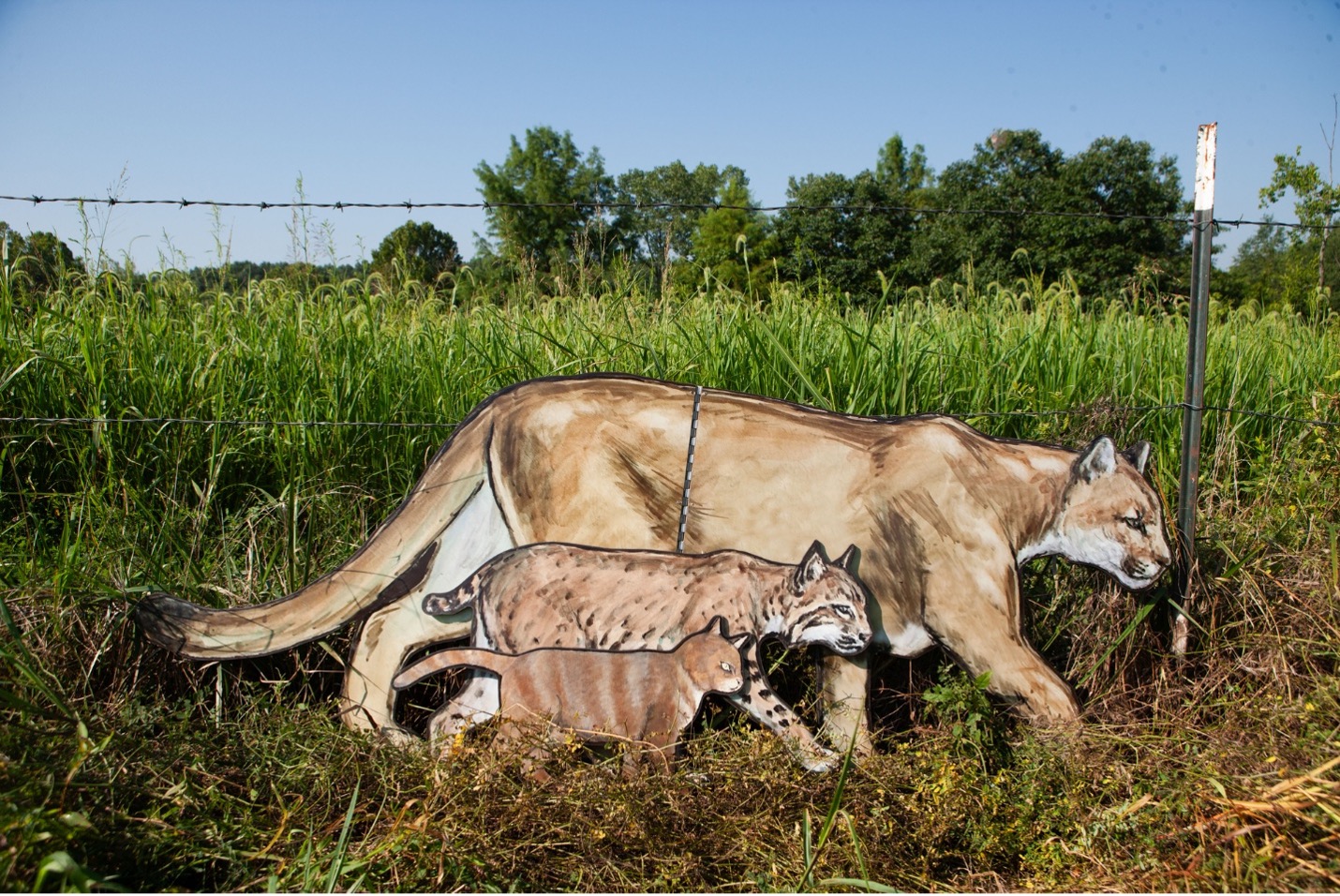
Mountain lion tracks are 2¾ to 3¾ inches wide. Bobcat tracks are much smaller, less than 2 inches wide. Even six-month-old mountain lion kittens leave bigger tracks.
Right to Use
Use of this image is restricted to MDC only
Image

Image

Image

Title
Visual Identification
Media
Image
Is user submitted
Credit
MDC
Right to Use
Title
Sounds
Body
Mountain lions rarely make any noises. The most common call people have heard mountain lions make is called a caterwaul and has been described to sound like a loud screaming like noise. However, lions typically only make caterwauls during the breeding season, which occurs during the winter months. More often than not, when people hear scream like noises in the woods, it’s a bobcat or fox, which make similar sounding noises.